Guide for planning a reunion


Gathering people together at King´s Garden

Back in 2009, I had just started a technical college educational program at TEC, right by Forum Station. Earlier in my life, I hadn’t had much luck making friends, as I was a bit socially awkward and generally different from my classmates. But at TEC, I found myself in a friend group that was just as quirky as I was. When we received our basic course certificates in the spring of 2010, some of them suggested that I should join them at King´s Garden, as the atmosphere there was cosy. Having lived my life like a goldfish in a bowl, I was a bit nervous at first, but after my first day there, I was hooked. From then on, I spent every weekend there, where I had the pleasure of meeting many wonderful people. By 2012, I became busier with my studies and work, and I generally had less energy to be part of the scene as often. However, I believe that you shouldn’t discard people just because they are part of your past. That’s why, starting in 2016, I began planning and executing a kind of reunion day once a year. The idea was to catch up with the people you associated with in your younger days. It’s a kind of nostalgia drug that I like to take on a warm summer day, one of the 365 days of the year.
That’s why I’ve kept doing it ever since, and now I would like to share my experiences, flaws and methods that worked to create a successful reunion get-together, if you also want to catch up with a group of people you used to see often in the past.
Event Planning from Start to Finish
1. When should the event take place?
Outside of festival schedules
It’s worth checking when festivals take place during the summer when planning this type of event. I’ve learned from my own mistakes by inviting people during events like Roskilde Festival, Distortion, or Copenhell. So, check which weeks these other events fall on in the year you’re planning your event.

The period
The summer season is ideal because of the good weather. However, I’ve also had success hosting the event during the Easter holidays.
Saturday
Some people get off work late on Fridays.
Time
Most people are available on Saturdays from 2:00 to 4:00 PM.
Stick to your date
Another tip is to be decisive and stick to your chosen date. There will always be people who comment or say, “I can’t make it that day,” or “Can’t we do it on Saturday in week 33 instead?” The answer is “No,” because otherwise it will never happen.
While this target audience is for people who are "alternative" and like to watch metal music live, and the event happens outside at a park, you can still use these tips if you are planning a reunion for your former economics classmates at a Sushi restaurant. Just make sure you think of possible scenarios through the planning phase.
2. How should the Facebook event look?
Informative
By “informative,” I mean that you shouldn’t just write “King´s Garden” under the address, but rather something like “Øster Voldgade 4A, 1307 Copenhagen.”
Helpful
The former gang of friends moved to another park a couple of years ago. Be a helpful host by explaining, for example, where exactly you’ll meet up in Ørstedsparken. As you can see in the picture below, in the summer of 2025, I tried to draw the route to the meeting spot.

Themed
Make sure to “decorate” the event with a banner that reflects the spirit or theme of the gathering. The example below was made using the super-easy program Canva, which is free. In previous years, I just found a photo on Google of King´s Garden.
Facebook event
And one last important note: It must be a Facebook event, as necessary information tends to get lost or buried in a flood of Messenger messages. *In your case, as the reader, perhaps Messenger, WhatsApp, or LinkedIn is more suited.
3. How do you find the people to invite?
3.1 Place your Facebook friends into a friend category
It can be difficult to keep track of all your Facebook friends, especially because some of them are not people you know from the scene - for example, family members and old schoolmates.
So, before you invite people, follow these steps:
Click on “Friends” on your Facebook homepage.

Click on “Custom lists” (I’m not sure what this is called in Danish).

Click on “Create list” and name it something like “Kongens Have.”

Go through your friend list.

5. Find a friend from the scene and click on “Friendship,” where a dropdown menu will appear. Then click on “Edit friend list.”

6. Choose the category you created.

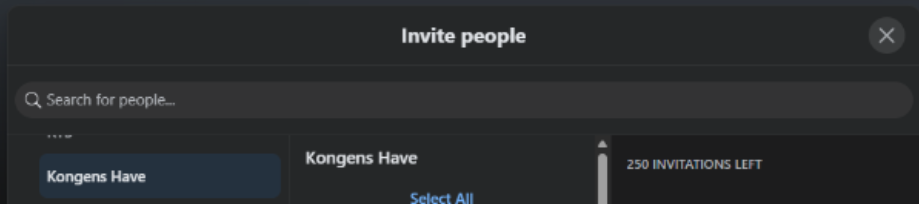
7. Once you’ve done this with everyone from the scene that you’re friends with on Facebook, go to the event you’ve created (which you’ve already ensured is informative, helpful, and themed) and select the friend category you created (e.g., “Kongens Have”) to invite people.
3.2 Invite from Facebook group
When you click “Invite” on the Facebook event, you can also see the groups you are a member of on the left side. If there is a group that some people are a member of, then that is also an option. In your case, it could be "Business Economics 101 class of 2017". From there, you can simply select the group and invite its members to the event.
3.3 Ask invitees to invite others
Create a post in the event asking invitees to invite anyone who’s missing, as you may not be Facebook friends with everyone from the group, and not everyone is a member of the Facebook group.
4. When should people be invited?
Several months before the event
I usually create the event on Facebook and send out invitations three months before the date. This is because people need time to see the invitation and plan ahead. Culturally, in Denmark and the Nordic countries, people prefer to receive invitations well in advance. In contrast, in Southern Europe, it’s more common to be spontaneous and meet within a few days. Another reason is that those of us who attend these reunions nowadays are typically in our late 20s to mid-30s. We have less energy and more responsibilities for various reasons, such as careers and children.
5. How do you motivate others to join?
Nostalgia
Promote your event by utilising emotional triggers, such as nostalgia. After all, it’s a kind of “reunion” party, where you meet up with people you used to hang out with often during your younger days.
Show examples from previous events
Even though those attending might remember what it’s like to participate, you can refresh their memory and rekindle their interest by posting a few old photos from previous events.

Humor
Who doesn’t love a good meme? When you post content - whether it’s text or images - you increase “traffic” or attention around the event. And that content might as well make people smile. See an example below.

Start a debate or ask a question
This encourages people to engage and participate in the post, which means more of the invitees—who may not have noticed they were invited—will become aware of the event as it appears in their Facebook feed.

Other ideas
A music video from YouTube.
A quiz or poll you can create in the event.
GIFs.
A checklist of what people should bring to the event.
How often should you post?
Since you invite people 3 months before the event date, a good rule of thumb is to post something every other week. In the last couple of weeks leading up to the event, you can post once or twice a week to boost excitement as the day approaches.
But don’t overdo it, as it can become annoying - stick to the rule of thumb.
6. When should people get a reminder?
Only remind those who are…
“Interested” or “Invited” in the event - meaning those who have neither clicked “Going” nor “Not Going.”
Remind via Messenger
Many people don’t even notice that they’ve received an invitation to a Facebook event. Therefore, send them a private message on Messenger.

The rule of thumb is 2 weeks before
I’ve made the mistake of reminding people three weeks before, only for them to forget again because of everyday life - work, studies, hobbies, kids, etc. On the other hand, if you remind them just one week before, they might have already made other plans.
7. What should you do a few hours before?
Photo of a map
Even though most participants know where we usually sit, not everyone remembers. We used to hang out in Kongens Have, but now it’s been replaced with Ørstedsparken. Therefore, some potential participants—especially those who haven’t been around the group since we moved to Ørstedsparken—might not know the exact spot.

Video recording
People are visual, and there’s just something nice about a cozy video of you walking from the entrance to the seating area.
Keep spirits high
If something unpredictable happens, such as bad weather, encourage people to still join by showing that the weather is improving later on.
8. What should you do during the event?
Share photos/videos throughout the event
Every hour, you can take a photo of the group circle to show those who haven’t arrived yet that the party is already happening. However, remember to ask for permission - especially if you’re taking close-up videos of people’s faces.
Give updates on the number of attendees
Some people who are considering joining on the day of the event might assume it’s not worth coming because they think, “There are probably only a few people there.” By posting occasional updates like, “We’re 16 people here now,” you can motivate others to get off the couch and join in.


Comments